If you’re trying to lose weight, track macros, or simply understand your daily eating habits better, two apps always come up: MyFitnessPal and Lose It! I’ve personally used both of them for years—sometimes switching back and forth depending on where I was in my fitness journey.
Since you’re probably wondering “Which one is actually better for me?” this guide breaks everything down using real experience, not generic app descriptions. I’ll walk you through the differences, the surprises I found, and what actually helped me stick to healthier habits.
Let’s dive in.
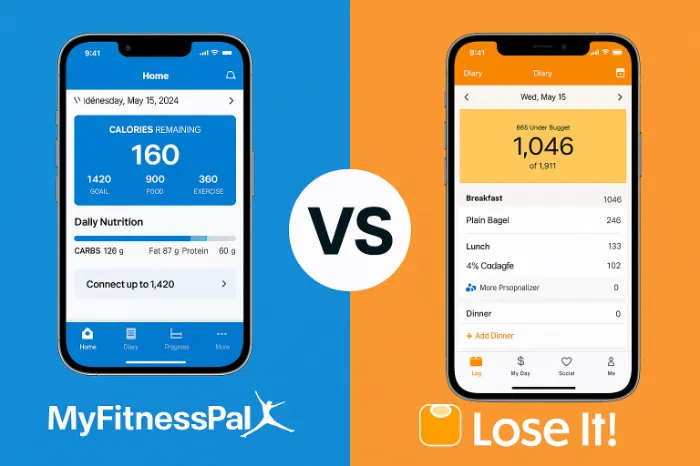
MyFitnessPal vs Lose It — Quick Comparison
Here’s a simple summary before we go deeper:
| Feature | MyFitnessPal | Lose It! |
|---|---|---|
| Food Database | Largest in the industry | Smaller but more accurate |
| Ease of Use | More tools, more complex | Extremely simple |
| Macro Tracking | Excellent | Good but limited in free version |
| Barcode Scanner | Very accurate | Good scanner + “camera scan” |
| Integrations | Fitbit, Garmin, Apple Health, more | Apple Health, Fitbit, fewer others |
| Ads in Free Version | Yes, heavy | Yes, lighter |
| Premium Price | Higher | Slightly cheaper |
| Best For | Macro-focused, long-term logging | Beginners, clean tracking |
Both apps work, but they help in different ways.
What Makes MyFitnessPal Strong (and When It Struggles)

I’ve used MyFitnessPal the longest, mainly because it gave me a sense of structure when my eating habits were all over the place years ago. Here’s what stands out.
MyFitnessPal Pros (from real use)
✔ 1. The biggest food database—almost everything you eat is already there
This is MyFitnessPal’s superpower. Whether it’s a packaged snack or something homemade, you’ll likely find a near match.
✔ 2. Perfect for macro tracking
If you’re into fitness, weight training, or specific diets (keto, high-protein), the macro breakdown is incredibly helpful.
✔ 3. Great integrations with Fitbit & Garmin
Your workout data, steps, and calories burned sync in seconds.
✔ 4. Barcode scanner is very accurate
It’s fast and rarely misses items, which helped me stay consistent during busy weeks.
If you’re using a Fitbit, this step-by-step tutorial shows you how to connect it easily: How Do I Connect Fitbit to MyFitnessPal?
MyFitnessPal Cons (from daily frustration)
❌ 1. Too many ads in the free version
This is probably the #1 complaint. Sometimes it feels like ads show up between every other screen.
❌ 2. Food database isn’t always “clean”
Because users can upload entries, you’ll find duplicates or inaccurate calories.
Example:
I once scanned a yogurt pack and got three different calorie results. Small thing, but frustrating.
❌ 3. The interface feels a bit older than Lose It
It works — but it’s not the most visually refreshing app.
If your MyFitnessPal app is not syncing properly, I created a full guide here:Why Is MyFitnessPal Not Syncing? Here’s What Helped Me.
Lose It — Simpler, Cleaner, and Sometimes Surprisingly Accurate

I first tried Lose It during a period when MyFitnessPal felt overwhelming. Within minutes, I understood why so many beginners love it.
Lose It Pros (based on long-term testing)
✔ 1. Clean, modern, beginner-friendly design
Everything feels lighter, calmer, and less cluttered.
✔ 2. The database is smaller but more standardized
You’ll see fewer duplicate entries, which helps when you need accurate nutrition logging.
✔ 3. The “photo food scanner” is shockingly good
You point your camera at a food item, and it guesses what it is.
It’s fun—and surprisingly accurate.
✔ 4. Very motivating for weight loss goals
Lose It focuses more on habit building, not just numbers.
Lose It Cons (what made me switch back sometimes)
❌ 1. Fewer free features than MyFitnessPal
For example, detailed macro tracking often requires Premium.
❌ 2. Limited integrations
It works well with Apple Health and Fitbit, but not as many devices as MyFitnessPal.
❌ 3. Smaller community
If you like forums or support groups, MyFitnessPal wins here.
Tracking Accuracy — Which One Logged My Meals Better?

During one of my “test weeks,” I logged everything into both apps at the same time. Here’s what happened:
➤ Lose It gave me more accurate calorie counts for fresh foods.
Its database felt cleaner.
➤ MyFitnessPal won for packaged items.
Almost every item existed in its huge database.
➤ Barcode scanner: MyFitnessPal was consistently faster.
If logging speed matters to you, MyFitnessPal wins.
Premium Price — Which One Gives More Value?
MyFitnessPal Premium
Higher price but unlocks:
- Full macro tracking
- Meal plans
- More detailed insights
- No ads
Lose It Premium
Slightly cheaper and unlocks:
- Advanced food insights
- More accurate macro controls
- Patterns and habit analysis
Which one is worth paying for?
If your goal is serious macro tracking, MyFitnessPal Premium is better.
If you want a calm, simple, habit-based approach, Lose It Premium wins.
If you’re wondering whether Premium is worth the money, here’s my honest review: Is MyFitnessPal Premium Worth It?
Which One Should You Choose?
Here is the simplest way to decide:
| Goal | Better App |
|---|---|
| Beginner trying to lose weight | Lose It |
| Someone focused on macros | MyFitnessPal |
| User who logs frequently | MyFitnessPal |
| Someone who hates clutter | Lose It |
| Budget-conscious user | Lose It |
| Person using Fitbit/Garmin daily | MyFitnessPal |
My Real Experience After Using Both Apps for 6+ Years
This is the honest part.
I started using MyFitnessPal in my early 20s when my eating habits were messy and emotional. I needed structure, and MyFitnessPal gave me that. Logging everything—even imperfectly—made me more aware of how much I was actually eating.
Years later, when life got busy, I found Myself burned out from constant logging. That’s when Lose It felt refreshing. It didn’t overwhelm me. It didn’t make me feel guilty about “perfect tracking.”
But eventually, when I got into strength training and needed accurate macros, I returned to MyFitnessPal again.
The truth? I still switch between the two depending on what season of life I’m in.
And that’s exactly why this comparison matters.
Final Verdict — MyFitnessPal vs Lose It
If you want the most features, the biggest database, and macro precision, choose MyFitnessPal.
If you want simplicity, fewer frustrations, and a cleaner experience, choose Lose It.
Both apps can help you hit your goals — the real question is:
➡ Do you want powerful tracking, or do you want an easy tracking habit you can stick with?
If you love tracking habits, you can also check out my experience with the weekly habit tracker: MyFitnessPal Weekly Habits Tracker.
Frequently Asked Questions
Is MyFitnessPal more accurate than Lose It?
MyFitnessPal is more complete, but Lose It is more standardized.
Accuracy depends on what foods you track.
Do both apps work with Fitbit?
Yes, but MyFitnessPal works better with more device types.
Which app is better for beginners?
Lose It — the interface is cleaner and less stressful.
Which one is better for macro tracking?
MyFitnessPal, especially with Premium.
Is Lose It worth paying for?
If you want simple, calm tracking without ads—yes.